Educational Resource — Illustrative Only

Understanding technological change.

A guided tour through the long arc of innovation — from the first industrial revolution to the AI-driven convergence shaping the next decade. Provided for general context only; Clawback's investment decisions are grounded exclusively in cash-flow fundamentals, proven business models, and rigorous due diligence.

Educational Resource — Illustrative Only. Clawback focuses on cash-flow positive businesses with existing proof of concept. This content is provided for general knowledge only and does not constitute investment advice or reflect Clawback's actual portfolio strategy.

The Premise

Progress is not random — it arrives in waves.

For more than two centuries, the global economy has been reshaped by a succession of long innovation cycles. Each began with a foundational technology, accelerated through decades of productive deployment, and gave way to the next — larger and faster than the last.

Understanding this rhythm matters. It explains why some economies pulled ahead, why others fell behind, and where the genuine engines of long-term value have always been built. The interactive timeline below traces six of these waves — the same lens we use to keep perspective on what is durable versus what is hype.

Innovation Cycles

Six waves of innovation — each larger and faster than the last.

Hover or tap any wave to explore its economic and societal impact.

Industrial Revolution1st Wave1785–1845Age of Steam & Railways2nd Wave1830–1900Electrification & Chemistry3rd Wave1880–1950Petrochemicals & Electronics4th Wave1940–1990Digital & Biotech5th Wave1985–2020AI, Clean Energy & Autonomy6th Wave2015–

Innovation in Geography

How the waves shaped countries.

Every innovation wave landed differently across the world. Click any country on the globe to see which waves it participated in, the role it played, and the economic impact it captured.

For the full interactive macro model — country rankings, stock exchanges, index snapshots, and analytical frameworks — open the dedicated module.

Open the Macro Model

Three Interconnected Drivers

Where the next decade compounds.

Three sectors have quietly but relentlessly reshaped the global economy: semiconductors, agritech and food systems, and biotech and human health. They are not isolated — they form an interconnected web of progress, now being accelerated by artificial intelligence.

Pillar 01

Semiconductors

The foundation of the digital age

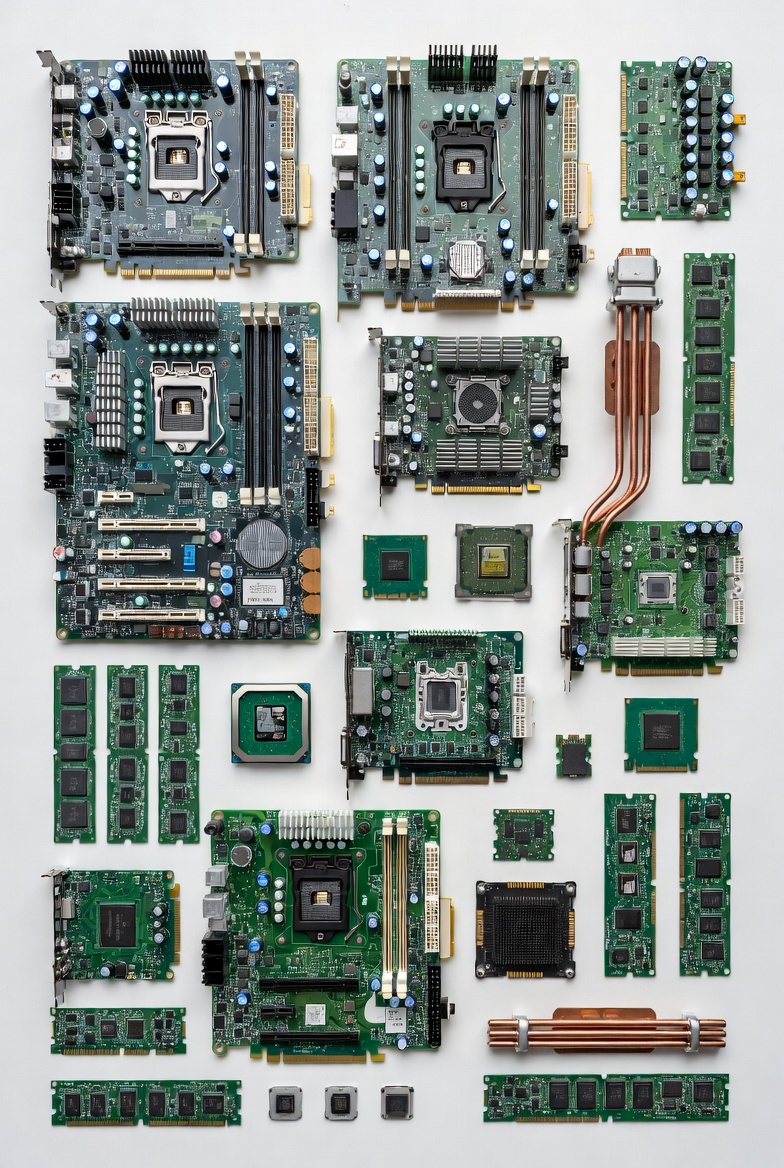
Over two decades, the semiconductor industry has grown from a foundational technology into one of the most critical engines of global progress — driven by data centres, mobile, automotive electronics, and now AI infrastructure.

+26.2%

YoY growth in 2025 — one of the strongest in industry history

Source: World Semiconductor Trade Statistics (WSTS), SIA Factbook 2025, SEMI

Global semiconductor sales (USD billions)

2001
$139B
2024
$630.5B
2025
$796B
2026e
~$975B

Pillar 02

Agritech & Food Security

Feeding 9.7 billion sustainably

Agritech is moving from pilot projects to mainstream adoption — satellite monitoring, IoT sensors, AI crop analytics, and autonomous machinery are reshaping how the world produces food.

−95%

Less water in vertical farming vs. traditional agriculture

Source: Mordor Intelligence, MarketsandMarkets, EOS Data Analytics, FAO

Global agritech market size (USD billions)

2024
$24.4B
2025
$27.4B
2030e
$49B
Pillar 03

Biotech & Longevity

New frontiers of human health

The convergence of biotechnology, data science, and medicine is opening new frontiers — cell and gene therapy, personalised medicine, AI-enabled drug discovery, and the emerging field of longevity science.

AI-led

Drug discovery, protein folding, trial design — all accelerating

Source: Deloitte 2025 Life Sciences Outlook, McKinsey & Company, Stanford HAI AI Index

Estimated AI uplift to biopharma value (% of revenue)

Today
~2%
Near-term
~6%
Mid-term
+11%

The AI Multiplier

Three frontiers, one accelerant.

What makes this moment historically significant is not any single technology in isolation — it is the convergence of semiconductors, agritech, and biotech, all being supercharged by artificial intelligence.

Semiconductors are the foundation

AI training and inference require exponentially more advanced chips. U.S. private AI investment reached $286B in 2025 (Stanford AI Index), directly fuelling next-generation chip demand.

Agritech is being reshaped

AI-powered analytics, computer vision, and autonomous systems optimise planting, irrigation, pest control, and harvesting — improving yields and sustainability simultaneously.

Biotech is entering a new era

AI is dramatically accelerating drug discovery, protein folding prediction (AlphaFold), clinical trial design, and personalised treatment recommendations.

In each case, AI does not replace the underlying science or engineering — it multiplies human capability. The result is not incremental improvement, but step-change acceleration across multiple domains simultaneously.

Sources: Stanford HAI AI Index 2025 & 2026, McKinsey Global Institute.

Breakthroughs That Matter

What does tomorrow hold? It will redefine everything.

Evolution of automobiles — from early motorcar to modern electric vehicle

Evolution of automobiles — from early motorcar to modern electric vehicle

A Note on Responsible Progress

Innovation matters most when it endures.

At Clawback, we believe technological progress is most valuable when it is grounded in integrity, long-term thinking, and genuine human benefit. The sectors above represent extraordinary opportunities — but they also carry responsibilities.

Sustainable growth in these fields will depend not only on innovation, but on thoughtful governance, transparent data practices, and a clear focus on creating enduring value rather than short-term gains.

Clawback focuses on cash-flow positive businesses with existing proof of concept. This content is provided for general knowledge only and does not constitute investment advice or reflect Clawback's actual portfolio strategy.